Serving Topical Formulation Manufacturers
Topical products live or die on how they feel and perform on skin — absorption, comfort, and consistent numbing or antiseptic action, without irritation. Whether it's a numbing cream, an antiseptic gel, or a skin-contact formulation, the raw materials behind it need to behave predictably batch after batch, since the finished product is going directly onto a patient's skin.
Our portfolio includes Lidocaine Base (CAS 137-58-6) for smooth dermal release in lipophilic creams, gels, and transdermal patches, as well as Chlorhexidine Base (CAS 55-56-1) and Chlorhexidine Digluconate for broad-spectrum topical disinfectants, surgical hand scrubs, and wound care solutions. Additionally, co-solvents and humectants like Glycerine, Polyethylene Glycol (PEG), Dimethyl Sulfoxide (DMSO), and Benzyl Alcohol enable optimized skin penetration, emulsion stability, and skin hydration.
Produced in WHO-GMP and ISO certified chemical plants in Ankleshwar, India, our pharmaceutical-grade raw materials undergo strict microbial limit testing, residual solvent checks, and assay validation. Topical pharmaceutical manufacturers benefit from dependable supply continuity, regulatory DMF documentation, and customized packaging options tailored to large-scale compounding.
General Information
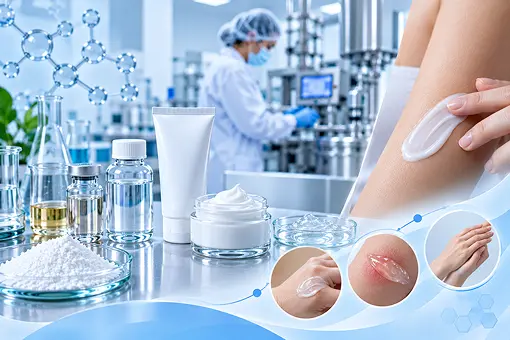
Topical formulation manufacturing covers a wide range of end products — anaesthetic creams, antiseptic gels, disinfectant solutions, and dermatological preparations. Unlike injectables, the tolerance for certain impurities may differ, but the requirement for consistency, purity, and predictable performance on skin remains just as strict.
This is where our Lidocaine Base (CAS 137-58-6) comes into play; it has been specifically formulated to be used topically to ease itching, burning, and pain due to inflammation of the skin, making it the obvious choice for inclusion in numbing creams, gels, and other topical anaesthetics. Chlorhexidine Base, together with its downstream derivatives including Gluconate, Acetate, and HCl, can be included in topical products intended for disinfection and anti-microbial purposes due to the fact that chlorhexidine has been known for many years now as a reliable broad-spectrum antiseptic.
Excipients & Regulatory Support
In addition to the actives mentioned above, topical formulations may also require certain excipients and carriers; for example, Benzyl Alcohol can serve as both preservative and a mild local anesthetic in topical formulations, while Glycerine acts as a humectant in them.. IPA and other solvents also play a role during processing and purification stages.
Every product we supply into this category carries the same regulatory backing as the rest of our portfolio — WHO-GMP certification, ISO certifications, HALAL certification, and DMFs, giving topical formulators the documentation they need for their own regulatory filings.
Why Choose Us
Purpose-relevant actives
Lidocaine Base for topical anaesthetic relief, Chlorhexidine derivatives for antiseptic formulations
Supporting excipients under one roof
Benzyl Alcohol, Glycerine, and processing solvents like IPA, reducing the need to juggle multiple suppliers
Decades of formulation-relevant manufacturing
chlorhexidine and lidocaine have been core products since our early years
Full regulatory documentation
WHO-GMP, ISO, HALAL certifications, and DMFs already in place
Consistent quality across both actives and excipients
so topical formulators aren't managing variability across multiple raw material streams
Applications
Topical formulation manufacturers typically source from us for:
Anaesthetic Creams & Gels
Anaesthetic creams and gels built around Lidocaine Base, relieving itching, burning, and pain from inflamed skin.
Antiseptic Topical Products
Antiseptic and disinfectant topical products formulated around Chlorhexidine and its salts.
Preservative Support
Preservative and mild-anesthetic support using Benzyl Alcohol.
Moisture Retention & Skin Feel
Moisture retention and skin-feel enhancement using Pharma Grade Glycerine.
